

Women Of The C-Suite: Elke Lipka Of TSRL, Inc. On The Five Things You Need To Succeed As A Senior Executive
/This article was originally published as seen here in Authority Magazine.
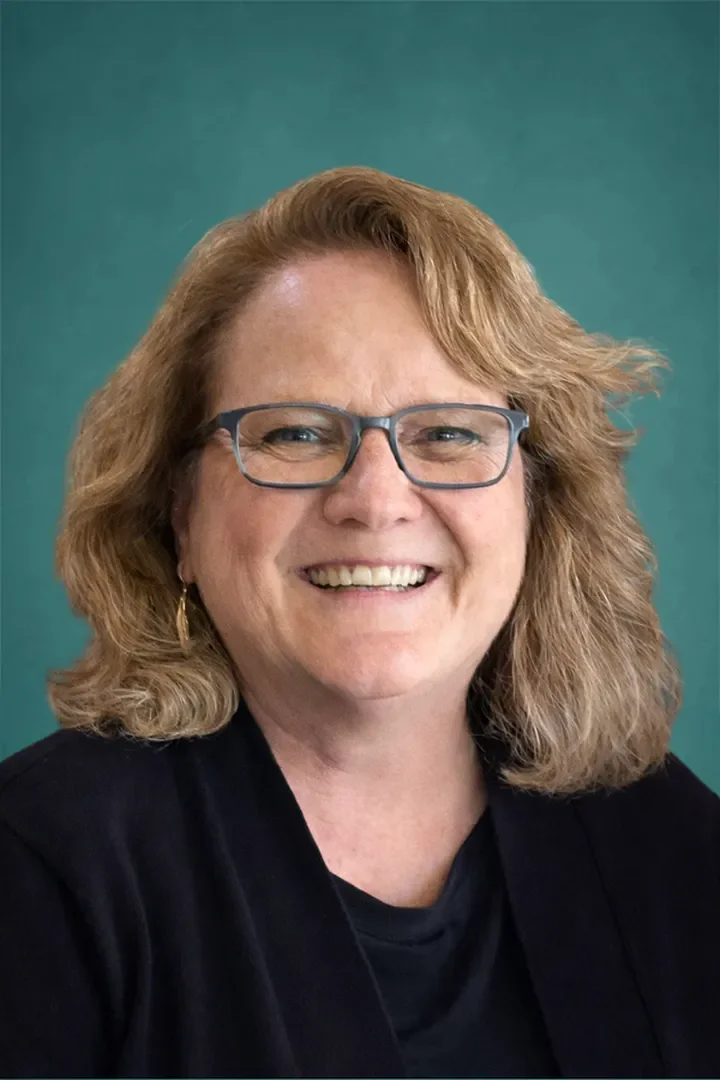
Protecting your sanity and energy is actually part of being successful, not separate from it.
As a part of our series, we had the pleasure to interview Elke Lipka.
Dr. Elke Lipka is the President and Chief Executive Officer of TSRL, Inc., having been with the company for more than 20 years, and she was recognized as one of the “Top Women in Tech to Know in 2026” by Purpose Jobs. Under her leadership, TSRL has built a reputation becoming the preclinical CRO of choice by strategically moving complex drug candidates toward the clinic. Dr. Lipka has secured nearly $20 million in non-dilutive funding to advance TSRL’s portfolio and expand partnerships with academic, government, and industry innovators across the United States and Europe.
Thank you so much for joining us in this interview series! Before we dig in, our readers would like to get to know you a bit more. Can you tell us a bit about your “backstory”? What led you to this particular career path?
I’ve always been very independent and curious by nature. Early on in my career, I worked in a retail pharmacy in Germany, and I realized pretty quickly that the routine side of the job just was not for me. I wanted to ask bigger questions, solve problems, and work on things that felt more innovative and impactful. That pushed me toward graduate school and into pharmaceutical research and drug development. Eventually, I worked my way up to President & CEO of TSRL, the preclinical CRO behind smarter drug development.
What drew me in was the combination of science and real human impact. I loved that the work we were doing could genuinely improve someone’s life. Over time, that passion grew into leading teams, building collaborations, and helping bring new drug delivery technologies forward in ways that could actually make a difference.
Can you share the most interesting story that happened to you since you began leading your company?
One story that always makes me smile happened during COVID when I first connected with Professor Ryan Donnelly, PhD at Queen’s University Belfast on the microneedle technology. In August 2021, after months of restrictions and uncertainty, I flew into Dublin, rented a stick-shift car, and drove myself across Ireland in the rain on the left side of the road while Siri tried her best to keep me alive.
I was determined to see the technology in person and meet Dr. Donnelly face-to-face.
That trip ended up becoming the start of a fantastic collaboration and friendship. The science was exciting, of course, but what stood out most was the shared energy around innovation and discovery. Sometimes the best partnerships begin with a leap of faith and a very stressful drive through the Irish countryside.
It has been said that our mistakes can be our greatest teachers. Can you share a story about the funniest mistake you made when you were first starting? Can you tell us what lesson you learned from that?
I’m not sure it felt very funny at the time, but looking back, I definitely made the classic mistake of believing I could do absolutely everything all at once. Early in my career, I was working a full-time job, raising two kids, and starting an executive MBA program at the same time. Somewhere in my mind, I thought I could power through all of it without slowing down.
What I learned very quickly was that I was, after all, not superwoman.
There were plenty of moments where I felt completely overwhelmed and stretched too thin. At the time, I saw asking for balance as a weakness instead of something necessary. Looking back now, I realize that protecting your sanity and energy is actually part of being successful, not separate from it. I still made it through, and I’m proud of that, but the experience taught me a lot about priorities, resilience, and giving myself permission to step back and breathe once in a while.
None of us are able to achieve success without some help along the way. Is there a particular person who you are grateful towards who helped get you to where you are? Can you share a story about that?
Often, success comes down to mindset as much as anything else. Early in my career at Parke-Davis (now Pfizer), our department head was Bob Powell, PharmD, who was truly ahead of his time in the 1990s. He was instrumental in establishing the pharmacometrics group at the U.S. Food & Drug Administration (FDA), but at the time he was considered somewhat controversial because his thinking challenged traditional approaches.
Bob was incredibly supportive of some of the project management ideas that I was developing within the department, which meant a lot to me and challenged me with their implementation. Then came the Pfizer acquisition, and like many acquisitions, it brought a lot of uncertainty and change. Before Bob left the company, we had an off-site meeting to help prepare the team for the transition. During that meeting, he spoke individually about many of the people in the department. When it came to me, his advice was simple, “Trust your vision.”
I still have the small gift that came with that advice, and I still think about those words often. There were many moments later in my career where I felt unsure about stepping into something new or making a difficult decision, and I would remember that conversation. Sometimes one sentence from the right person can shape the way you see yourself for years afterward.
Leadership often entails making difficult decisions or hard choices between two apparently good paths. Can you share a story with us about a hard decision or choice you had to make as a leader?
One of the most difficult leadership decisions I had to make involved evolving TSRL beyond its academic roots. The company was founded by my PhD mentor, Dr. Gordon Amidon, who is an extraordinary scientist with incredible instincts and vision. Naturally, many of the people involved with the company in its earlier years came from academic circles and were highly respected in their fields.
As the company grew, I realized that TSRL needed to broaden our approach if we wanted to scale successfully. We needed stronger product development processes, more industry-focused operations, and a team with experience beyond academia. That meant bringing in new perspectives.
Those decisions were very difficult to make because I respected the founder but did not always agree on the direction that I believed the company needed to take. Eventually, I had to bring the issue to the board to gain support for my strategy. Looking back, it was one of the defining moments of my leadership journey. It taught me that leadership sometimes means making uncomfortable decisions in service of the long-term health of the organization.
I recently wrote an article on how the company changed throughout its 40 years, and I would love for you to read it (article here).
In just a few words can you explain what a CEO does that is different from the responsibilities of the other leaders?
A CEO has to stay focused on the bigger picture. For me, that means paying close attention to where the world, the science, and the business environment are heading and recognizing potential headwinds early enough to adapt. Details matter, of course, but many operational details can be corrected relatively quickly. Strategic direction and timing are much harder to fix later. A CEO’s role is to set the vision, trust the team, and make decisions that position the organization well for the future.
What are the “myths” that you would like to dispel about being a CEO or executive? Can you explain what you mean?
One of the biggest myths is that CEOs need to be charismatic extroverts who command every room they walk into. I’m actually an introvert myself, and I know many highly effective leaders who are as well.
People often associate leadership with being the loudest voice in the room, but I have found that listening, observing, and thinking carefully before speaking can be incredibly powerful leadership qualities. This is especially true in the pharmaceutical, biotechnology, and clinical research industries. Introverts often bring thoughtfulness, preparation, and a calm presence during difficult moments. I find that there is no single personality type that defines a successful CEO, despite what popular culture sometimes suggests.
In your opinion, what are the biggest challenges faced by women executives that aren’t typically faced by their male counterparts?
One of the biggest challenges is still credibility. In my experience, women often have to establish expertise and authority repeatedly in situations where male counterparts are assumed to have it immediately. That can affect everything from being heard in meetings to access to funding and leadership opportunities.
I’ve experienced versions of this throughout my career. Years ago, when TSRL’s former president Dr. John Hilfinger was still alive, we attended a black-tie investor event, and he showed up in his favorite orange fleece jacket. Everyone thought it was brilliant and unconventional, almost a “Steve Jobs” type of persona. He was seen as visionary for breaking expectations, yet I remember thinking that if I had walked into the same room dressed that way, people probably would have assumed I was staff and asked me where the hors d’oeuvres were.
There are also more subtle moments that stay with you. During a board meeting several years ago, a male colleague with less experience in certain areas was repeatedly asked technical and strategic questions that should have been directed elsewhere. At the end of the meeting, a board member asked the female COO if she had taken the minutes. It was one of those moments that perfectly captured how quickly assumptions can still surface, even in highly educated and professional environments.
At the same time, I’ve also learned that performance and persistence matter. One accomplishment I’m especially proud of is our success with SBIR funding. At one point, we had four Phase II grants funded simultaneously, which places me in a very small percentage of female principal investigators nationally. Grants are interesting because they force the science and strategy to stand on their own merit (recent funding announcement here). In many ways, that process removes some of the unconscious assumptions that can exist elsewhere.
What is the most striking difference between your actual job and how you thought the job would be?
I think early on I imagined leadership as something much more strategic and abstract, almost like stepping into a completely different dimension of business. In reality, the core of the job still comes down to people.
A huge part of being a CEO at TSRL is aligning people around a shared vision and helping them move in the same direction, especially during uncertainty or change. Early in my career, I spent a lot of time focused on selling ideas, pitching opportunities, and proving value externally. Over time, I realized that what really sustains a company long term are the relationships behind all of that. Trust, mutual respect, and communication matter just as much internally as they do externally. At the end of the day, companies move forward because people choose to move forward together.
Is everyone cut out to be an executive? In your opinion, which specific traits increase the likelihood that a person will be a successful executive and what type of person should avoid aspiring to be an executive? Can you explain what you mean?
I do not think everyone necessarily wants, or is wired for, executive leadership, and that’s completely okay. We once did DISC mapping exercises with our team, and it was interesting to see how differently people are motivated and energized. In my experience, successful executives usually have a strong internal drive. They tend to be comfortable making decisions under pressure, taking action without having every answer upfront, and continuing to push forward even when things become difficult or uncertain. There is often a certain competitiveness and resilience there too. You have to be willing to fight for ideas, for people, and sometimes for survival.
I think this can be especially challenging in scientific environments because many brilliant scientists are naturally cautious, analytical, and thoughtful, which are incredibly valuable traits. However, executive leadership also requires comfort with ambiguity, risk, and momentum. You rarely have perfect information when making important decisions.
That said, there are always exceptions. Leadership comes in many forms. Some of the best leaders I know are quiet, highly thoughtful people. What they all share, though, is conviction and the willingness to keep moving forward when others hesitate.
What are your “5 Things You Need To Succeed As A Senior Executive” and why? (Please share a story or example for each.)
1. A clear vision and strategy
You need to know where you are going and why. Early on, TSRL had excellent science and incredibly smart people, but we needed a focused strategy around where we could truly compete and how to position the company for long-term commercial success. At some point, every executive has to make hard choices about focus. You cannot pursue every opportunity equally well. Once we became more intentional about our direction, everything from hiring to partnerships became more aligned and effective.
2. A trusted, high-performing team
No executive succeeds alone, and I have been fortunate to work with a very strong internal team over the years. Trust within that group has always been one of our biggest strengths. At times, some of the bigger challenges came from governance and differing opinions about how TSRL should evolve. Those situations taught me that building the right leadership structure around the business matters just as much as building the right operational team.
3. Capital
Every company needs resources to grow, innovate, and survive difficult periods. In biotech especially, there is never quite enough capital, and leadership often comes down to making smart decisions about where to invest limited resources. I have learned that raising capital is not simply about money, it’s about creating enough runway to give good science and good people the chance to succeed.
4. Expert advisors
One of the smartest things a leader can do is recognize where they need outside expertise. At TSRL, we have built a strong network of advisors across legal, patents, manufacturing, clinical development, and regulatory strategy. Sometimes one piece of advice at the right moment can save months of time, a major expense, or a strategic mistake.
5. Your health
Leadership is demanding in ways people often underestimate. There is constant pressure, uncertainty, responsibility, and decision-making. Over time, I realized that physical and mental health are not optional if you want to lead effectively for the long term. You have to make your health a priority because the company, your team, and your family all depend on your ability to stay grounded and resilient.
You are a person of great influence. If you could inspire a movement that would bring the most amount of good for the greatest number of people, what would that be? You never know what your idea can trigger.
It would have to be solving climate change. So many of the challenges we face globally ultimately connect back to environmental sustainability and the long-term health of our planet. Climate change affects health, food systems, economies, migration, and quality of life across generations.
I also think solving it would require the best version of humanity: science, innovation, collaboration, policy, and long-term thinking all working together. We already have incredibly smart people working on these problems. What we need is the collective will and urgency to move faster and think bigger.
We are very blessed that some very prominent names in Business, VC funding, Sports, and Entertainment read this column. Is there a person in the world, or in the US with whom you would love to have a private breakfast or lunch with, and why? He or she might just see this if we tag them.
Michelle Obama. Beyond her intelligence and accomplishments, I genuinely admire her resilience and composure under an extraordinary level of scrutiny and pressure. She managed to remain thoughtful, grounded, and authentic while living in one of the most public and demanding environments imaginable. I think it would be fascinating to hear her perspective on leadership, discipline, family, public perception, and how she maintained her sense of self through all of it. Also, I suspect she has a very sharp sense of humor about the experience now.
I invite you to connect with me and continue the conversation on LinkedIn, and Michelle is welcome to join us too.
Thank you for these fantastic insights. We greatly appreciate the time you spent on this.
